Showing posts with label Witches Kitchen. Show all posts

9.2.15

Crispy nuts

I love the diversity of almonds. But as a snack they never done it for me. That was until I came across a way to activate them.
Activated nuts, it sounds silly very interesting don’t you think?

But now, you’re intrigued, want to know how. Right?
The trick is to make them think it’s time become independent, grow up to become a tree.
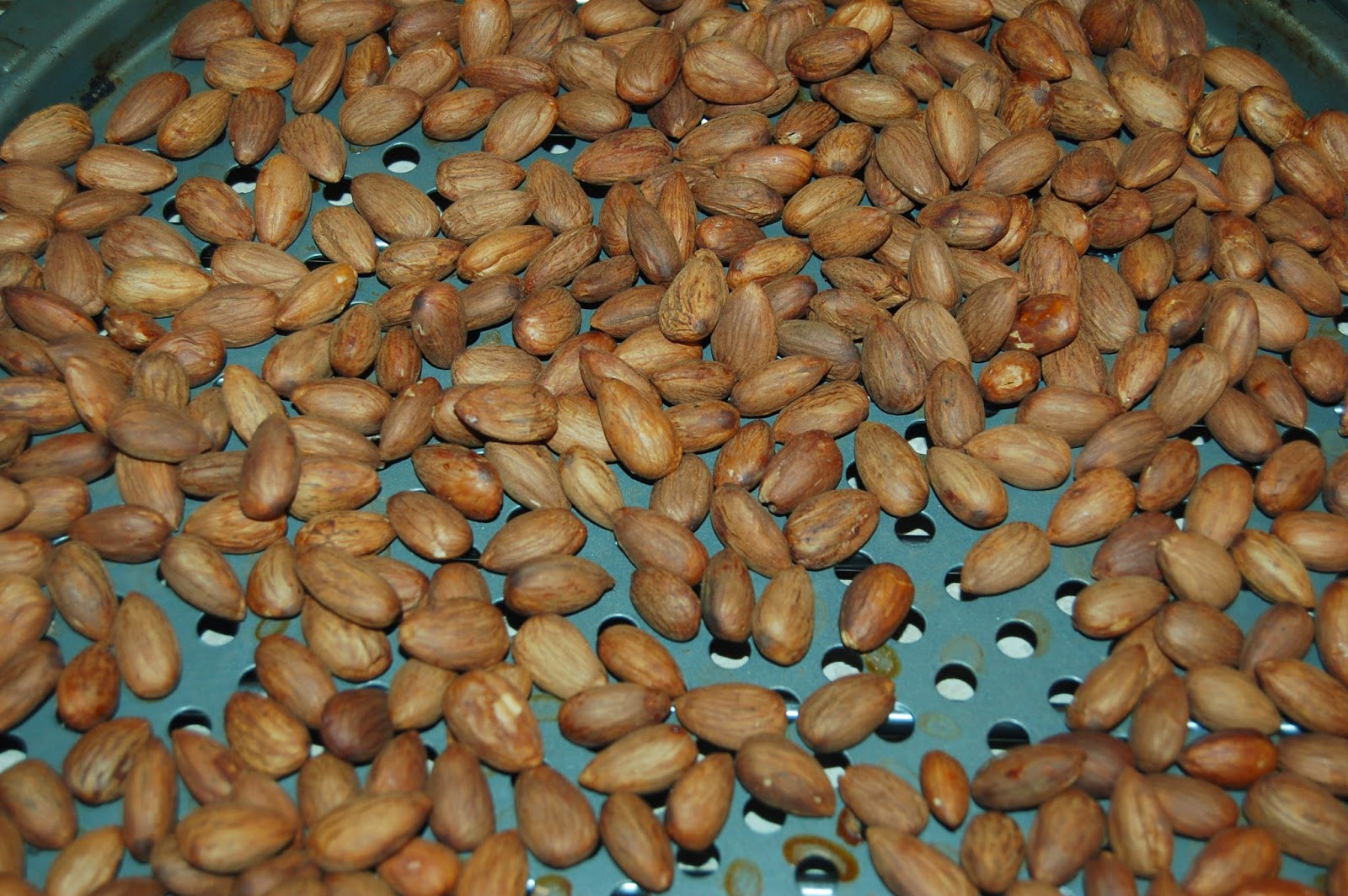
Soak them in water for a day and soon they’ll start to get ready to sprout. Stop right there, no need to actually let them sprout. Rinse and quickly shake or pat them dry(ish), then put on a baking tray(s) and roast very slowly on 90 to 120 degrees Celsius (fan forced) until completely dry and crispy. This will take a couple of hours, just give them a shake every now and them. Let them cool down before eating or storing them.

Why going through all this trouble? The transformation towards sprouting will alter the nut and change the skin to something that doesn’t irritate your throat and stomach. The nut will activate a lot of it’s nutrients, ready to take-off in growth.
But most of all, it alters and improves the taste, the nuts will also keep much longer.

They’ve become a very nice crispy snack, tossed through a salad or mixed in with your granola or nut butter.

My favourite recipes with activated almonds:
Baby spinach, beetroot (cooked and sliced, or raw and grated), soft goats cheese, cucumber pieces, capsicum slivers with a thick syrupy balsamic vinegar and some macadamia oil for dressing. A handful of the activated almonds go on top.

Or what about this fabulous chocolate nut butter?
Put in a food processor:
- Activated almonds, roasted macadamia’s and roasted cashews or whatever roasted or activated nut you like and have on hand.
- A couple of table spoons of oil (coconut, macadamia,..),
- A pinch of salt,
- As much/little honey depending on your sweet tooth (start with one tablespoon)
- Cocoa (unsweetened), I prefer Dutch or raw cocoa, several tablespoons for a dark chocolate taste.

Would you give it a go?

17.12.13

Nourishing Kitchen - making stock

We’re all made to believe witches are scary, the bad woman in the fairy tale, scaring little kids. 
I see that differently, I see them as Healers, in contact with nature. Paganism comes to mind again, but after Christianity became the main religion, the church has worked very hard to bring these believers of being one with nature in discredit. I’m not a Pagan, nor Christian. But I do believe in nourishing my loved ones, my surroundings. For me, in this stage of my life, it means making nourishing meals for my family, looking after them and the land that feeds us. For us they go hand in hand with a veggie garden. 
Our land is not ready yet for cattle, it needs a lot of work done before we can take that step (fences, dam, holding paddock). 
We’re no vegetarians, I do believe that to create a balance in the body we do need meat and fish. But also on the land, you find a balance when implementing animals. The garden grows like mad with manure.
But… Eating meat brings a responsibility with it, with big factory farming of animals the balance has gone. I do believe meat is as good as the life an animal has had. A cow being fed rubbish and being stuck inside to fatten up most of the year won’t bring much nourishment, mostly diseases. Where being able to graze and forage outside on a natural diet will bring many minerals and good fats once butchered.
For us this is a reason we rarely eat chicken, almost impossible to find chickens raised outside. An extra chook pen for own consumption is in the planning, but not yet realistic.
At the farmers market I can buy free range pork from a small local farmer. His meat is superb, with many different cuts available. Making pea&ham soup from a real hamhock makes all the difference.
Cattle around here stays outside all through the year. A lot of people on acreage have some cattle, to keep the grass down and to restock the freezer. Besides local fish and vegetarian meals, beef is what we mostly eat. But there is more then steak when an animal gets butchered. The many different cuts come with different recipes, but all gets used.
I’ve become a big fan of using bones in cooking, bringing so much more taste and nourishment to the table. Stock is a great way to create a meal brimming with goodies. All you need is a bag of soup bones, a walk through the veggie garden and a big pot. I roast the bones for half an hour before they go in the pot, it brings out more colour and flavour. Chucking the hot bones and scrapings in cold water will result in tiny cracks in the bone, making it easier for the minerals to become available. Add the roughly cut veggies and woody herbs and let simmer. The longer the better. 
I gave this pot two days of very slow simmering. All the marrow and gelatine was out by then. Straining, reheating and pouring boiling hot into meticulous clean bottles and jars will make sure that the stock will last (I still put them in the fridge and a part in the freezer). Trim the bit of meat of the bones and keep in a separate jar in stock. On cooling the lid will pop, the liquid turn into jelly and the fat will float to the top.
So next time your making a vegetable soup, a stew rice, curry or boil rice. Just add some of the stock, the fat can be scraped of if desired (this load of soup bones had a lot of fat attached).
This is a very quick one pot meal. Boil the veggies in the stock. For some extra carbs add some noodles or left over rice/pasta to the pot at the end and season to taste.
Click here for a great article on The healing power of broth

2.12.13

Breakfast Challenge

Over the last couple of years our eating habits have changed drastically, for the better I say.
Meals are made from scratch, bread is home baked, veggies and fruit come straight out of the garden or from the farmers markets and we’ve seriously cut back on processed foods and sugar.
We all feel better for it, took many little steps to get we’re we are now. I don’t think I would’ve managed in one giant step, the different jobs need to build into routines, before something new should be added. Going too fast is just setting yourself up for failure, it becomes to much and you give up.

Currently we’re looking at our grain intake. We’re big bread eaters or I must say, were, it’s such a Dutch habit. But it wasn’t doing it for me any more, despite the beautiful home baked sourdough bread, it was just too much grains and carbs in our diet and not enough of the rest to balance itself out.

For lunch I’ve gotten into the habit of eating dinner leftovers or soups. Making big pots, then canning or freezing in portion sizes makes soup very doable. But not so practical for lunch boxes. The kids do get a big container of veggies and fruit with them for recess every day, the box always comes back empty. But for the lunchbox a simple sandwich is still easiest and a lot less messy, they don’t give themselves much time to sit down and eat anyway. I’ve been told by my eldest that the lunch break is for running and playing with friends.

Dinner time has been sorted for years, good balanced meals with salads on the side.
So what needed to change was breakfast, a good start of the day goes a long way.
A challenge of eating less bread and more protein, fruit and veggies.
We’ve been going for a couple of weeks and I must say it isn’t as hard as I thought, variation is key. While we’re still trying out new things, the kids nominate days for the favourites so they can become part of the routine.

What does work so far:
- Banana&Blueberry Oat cakes, (a huge hit, I’ll post the recipe later)
- Fresh fruit with home made yoghurt and nutty granola (yoghurt link) (granola link), or use dry oats preferably soaked in the yoghurt overnight. Adding some chia and puffed quinoa for extra substance.
- Bacon, eggs, spinach and mushrooms, with a little goats cheese as a bonus.
- Porridge with fresh fruit, I do still find the carb content to high though, maybe we should add some chia, coconut chips, seeds and chopped nuts. Coconut cream instead of milk? (recipe link for fancy porridge)
- Veggie fritters (recipe link)
- Sourdough pancakes with fruit (recipe link)

I’m getting heaps of good ideas at The Witches Kitchen. Linda did a Breakfast Challenge for a whole year, every week a different recipe to inspire you to ditch the heavily processed commercial breakfast cereals and to eat some real food instead. (click here for the link)
Or for those reading Dutch, be sure to try this link as well

Trying out recipes can be so much fun, what do you think of these Blueberry Bolo Levedo’s (top photo)? Pretty as a button served hot for a lazy Sunday morning breakfast. Sourdough egg enriched bread, filled with cottage cheese and blueberries. A nice protein rich, tangy treat (recipe link).
Next time I’ll try a savoury filling, this would also make the perfect base for the Indonesian Bakpao.
What is your favourite breakfast? Can you eat it every day?

27.9.13

Witches Kitchen: Fermenting - Pancakes

Weekends always include a batch of pancakes, easily whisked up and always a big hit with the kids.
Flour, eggs, milk, and a little salt. Mix and you're ready to start baking them.

But if you know you'll be baking pancakes the next morning, why not try this:
The evening before mix your flour with a little water and yoghurt/whey/sourdough starter/buttermilk,
stir through and make sure the flour is wet. Put a plate on top of the mixing bowl and leave on the kitchen bench.
The next morning, heat up your frying pan(s), add a little salt, eggs and milk to the mixing bowl and mix until it becomes a smooth pancake batter.
Fry up your pancakes like you would normally do, preferably in a little ghee or coconut oil.
(extra time needed for this soaking option is 30 seconds)

But before you take out the plain flour out of the pantry, do you have any other flours you could use?

I make up an ever changing mixture which might include parts of brown rice flour, buckwheat flour, wholemeal spelt flour, plain flour, wholemeal flour.
The idea is to take a break from all the bakers and rye flour we have during the week in our sourdough bread.
If you whisk these flours up in the morning, the pancakes will be dense and rough. But soaked these will work just as well as plain flour. Other then the slightly acid taste you won't notice the difference.
Just add fruit

and maybe some of that “you’re nuts butter”...

24.9.13

Witches Kitchen: Fermenting - Traditional Bread

I've been pondering how to write this post. Fermenting comes in many forms, which could make this a very lengthy post. I still have a garden to plant, so I'll keep it short. I'll add a couple more posts down the road with easy ways to change your recipe to include a ferment.

The basics for fermenting are the same with soaking, only for grains there is no need to ditch the soaking water and it will start to bubble on it's own. Don't be scared, it's friendly.
The most basic and well known form of fermenting is bread. Traditional bread, because none of this soaking, sprouting, fermenting and such is new. It's the way our ancestors prepared their food for thousands of years.

The Industrialisation of our food created shortcuts, a shorter rising period, enhanced by machines to the point that most breads sold these days are chemically enhanced to keep the rising to an absolute minimum and the shelf life to the maximum. Time is more about money and convenience and less about health and taste.

We go through a lot of bread, fed up with the crappy tasteless bread I chose to bake my own.
Sourdough bread is amazing. It's so basic: flour, water and a little salt, but it needs time for the fermenting process to do it's thing, about 8 to 12 hours. This process will not only let your bread rise it will also improve the taste and make it much easier to digest.

My recipe on how to make sourdough bread, daily:
Click here for the link

If you're currently baking yeast breads, try to use a longer rise. Halving the yeast and using cold instead of warm water will easily change this, adding a couple of hours to the first rise, but creating a much better loaf. Substitute a tablespoon of your recipe required water with yoghurt or buttermilk and you're adding some good bacterias to help along.

Every now and then I make a batch of Turkish bread to accompany some soup or stew. The dough is a mixture of flour, water, yoghurt and olive oil. If I follow the recipe it takes about an hour to rise and 25 minutes to bake. Quick and easy, but it leaves me feeling bloated.
Putting the bread dough in the fridge for 24 before baking changes that, this very slow rise works with most breads.
The fermenting takes more time, but it doesn't cost more time. The time needed is planning the resting time. The prep and baking time stays the same.

15.9.13

Witches Kitchen: Soaking

For the last couple of months I've been soaking my rice, beans and legumes (lentils, chick peas,...) before cooking. It takes less then a minute of work, but will greatly increase the minerals that your body can absorb.
The minerals are always there, for many people of good reason to eat more wholemeal, brown rice and seeds and nuts. A good choice, the only tricky bit is that the natural survival mechanism of the seed contains plant toxins.  Which will prevent the actual absorption of these minerals, binding itself to them in your stomach. Besides the robbery, they irritate your stomach and in the case of beans leave you full of gas. You would put up a fight too if someone would come along trying to eat you!

There you are, choosing healthy, only to be left feeling bloated, a bit of a bugger don't you think?

But seeds can be tricked, that's where the soaking comes in. The soaking in a warm, dark spot tricks the seeds into thinking it has been sown, unwilling to kill it's own offspring it activates the enzyme that breaks down the protective layer. So give it 8 to 24 hours in tepid water and your good.

The process works even better if you add some good bacterias to kick start it off.
A tablespoon of yoghurt, buttermilk, organic vinegar, lemon juice, kefir, sourdough starter,... for every cup of seed you want to soak.
I tend to use organic, unpasteurized apple cider vinegar, easy to dose.

Before cooking, rinse in a sieve, making sure all your soaking water is gone.
Then cook in clean water (it will probably cook a little quicker).
Quinoa becomes a lot more palatable once soaked, beans won't give you gas and brown rice won't leave you bloated anymore.
Brown rice, ready to cook for some pumpkin curry tonight.
Starting the soak are the lentils, sunflower seeds and quinoa for tomorrows lentil patties.

What are you eating tonight, tomorrow, does it need soaking?

Coming up:
All your different flours will also greatly improve with some soaking, but need a different technique (just try to rinse your flour without loosing the lot to the kitchen sink...)
How, I'll explain in the next post in the Witches Kitchen series: Fermenting.

5.9.13

Witches Kitchen: sprouting


I think we all tried the watercress at one stage of our life, besides cute and funny also very tasty. It's like a mini garden in the kitchen!
Why not try something different? Mung beans are highly recommended, they sprout well and quickly and make a very tasty treat. Kids want them in their lunch boxes now...
They finish a bowl of laksa with a nice crunch. Most soups actually...  It takes about two days to sprout, just one or two table spoons of beans makes a nice bowl of sprouts. Saucer on the left is a new experiment, french lentil sprouts, they give a nice peppery taste. You can sprout just about every bean, grain, seed or even nuts. I might try chickpeas next or maybe some beetroot seeds for a funky colour.
Other then to complement your dishes. Why bother?
Well, without getting too technical, most seeds have a little protective layer around them for longer storage. And to keep predators away (that includes you). But soak them for twelve hours and keep them dark and moist (like in the ground) and they'll get active, making all the goodies available to help to kickstart new live. Bursting with goodness!

Much work?
I've looked before at sprouting jars and techniques but it all looked a bit fiddly. Someone recommended using a colander. Just hold it underneath the tap to rinse and put it back on the kitchen bench. Done.
I use a bowl underneath against dripping and a saucer to keep it dark and moist.

How exactly?
1. Choose your seeds
2. Cover them in water for 12 hours (fill the bowl underneath with water)
3. Rinse, keep them dark
4. Keep giving them a rinse under the tap every 12 hours, cover them again.
5. After two days you should have little tails growing.

3.9.13

Witches kitchen

That's how my husband calls our kitchen. So many things fermenting, soaking, sprouting, bubbling, baking,... Don't be afraid, I don't cackle, don't have a broom and the only hat I wear is a sun hat.

It has been quiet here on the blog, Alex has been keeping me on my toes. They are starting to get a little sore and very tired. For the last three weeks I've up at least 7 times a night, there have been nights I gave up counting at 15...

Two night in a row with just the one feed. I've given up on thoughts on him sleeping through anytime soon, but two good nights and I'm back in business. Which brings me back at the title: witches kitchen, because even through the broken nights, my kitchen kept me going without collapsing: power food.

I would like to start putting some things together for a new series: The Witches Kitchen.
First one will be: sprouting.
Think mung beans sprouts for a perfect laksa.

But first, kids to feed and more housework to catch up on, hope to be back here tomorrow.
Related Posts Plugin for WordPress, Blogger...